
15 June 2026
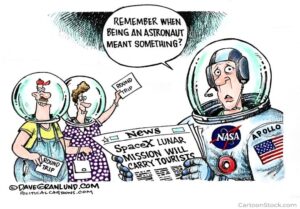
Every great bull market eventually produces investors who stop buying companies and start buying the future.
The future looked remarkably exciting in 1995. Well, to be honest, it looked rather like 1996. But for the purposes of this article, let’s agree that 1995 was when things really started to happen. The internet became commercial. Jeff Bezos sold his first books online. Netscape floated on the stock market, igniting the internet boom. It was also the last time the U.S. stock market enjoyed a winning streak longer than the nine consecutive up days we have just witnessed. It managed twelve in all.
Coincidence? Perhaps. But the parallels are less about economics than they are about human nature.
1995 also gave us Toy Story, the first fully computer-animated feature film. It wasn’t simply a box office success. It became the defining film of a generation. At its heart were two unforgettable characters. Woody, the dependable cowboy from a simpler age and Buzz Lightyear, the sleek new arrival convinced the future belonged to him.
Looking back, Buzz wasn’t simply the hero of an animated film. He captured the spirit of the age. He didn’t think he was a toy. He believed he was a Space Ranger with a mission. The old rules didn’t apply. Gravity, he assumed, was someone else’s problem. If you couldn’t see what he could see, then perhaps you simply hadn’t caught up yet.
Investors love a Buzz Lightyear. The stock market has always had a weakness for visionaries with grand missions and limitless ambition. Elon Musk wants to colonise Mars. Sam Altman believes artificial intelligence will transform society. And investors appear to have reached exactly the same conclusion. Within days of its stock market debut, SpaceX was valued at $2.5 trillion, despite generating less than $20 billion of annual revenue last year. For most of investing history, a trillion dollars was the size of an economy, not a company. The market is no longer valuing today’s businesses. It is pricing tomorrow’s possibilities.
That doesn’t mean the technology is wrong. Netscape and its technology meant the internet really did change the world. Artificial intelligence is likely to prove even more significant. The problem is that markets have an unfortunate habit of discounting decades of success, before those decades have actually happened. By late 1996, Alan Greenspan, then Chairman of the Federal Reserve, recognised where the optimism was heading. His warning about “irrational exuberance” briefly unsettled markets before they climbed for another three years. He wasn’t wrong. He was simply early.
The charm of Toy Story is that both characters change. Woody learns not to fear the future. Buzz learns that even the future has limits. He accepts reality without abandoning his ambition. Humans are rather less malleable than fictional characters. When Woody finally shouts “You are a toy!”, Buzz refuses to believe him. He carries on exactly as before. Only after trying to fly does reality begin to sink in. Investors have a habit of reacting in much the same way. The future usually arrives. Share prices simply have an unfortunate habit of getting there first.

Mole Valley Asset Management is authorised and regulated by the Financial Conduct Authority. Registered No. 613008 (www.fca.org.uk), 12 Endeavour Square, London E20 1JN
Mole Valley Asset Management, Registered in England No 08600041. Registered office: 275 High Street, Dorking, Surrey, RH4 1RY
MVAM Financial Advice is a trading style of Mole Valley Asset Management Limited which is authorised and regulated by the Financial Conduct Authority.